
How to Write a Letter of Intent
A trust can tell someone how to manage money. It can't tell them what makes your child feel safe. Here's how to write down what only you know, one page at a time.

Who Will Care for My Child With Special Needs When I’m Gone?
A perfectly drafted trust can't answer the question that matters most: who actually shows up? Here's how to name the right people, with real backups and a real yes.

Leave Money Without Costing Them Their Benefits
Having money set aside isn't the same as having it set up correctly. Here's where well-meaning families go wrong, and how to make sure every dollar reaches your child the right way.
What Does a Lifetime of Care Actually Cost?
Nobody can give you an exact number for the next fifty years. But you can get an honest range, and that changes everything about how the fear feels.

Start With the Life, Not the Money
Before trusts, before savings targets, before benefits, there's one question to answer: what life are you actually planning for? Here's how to define it.
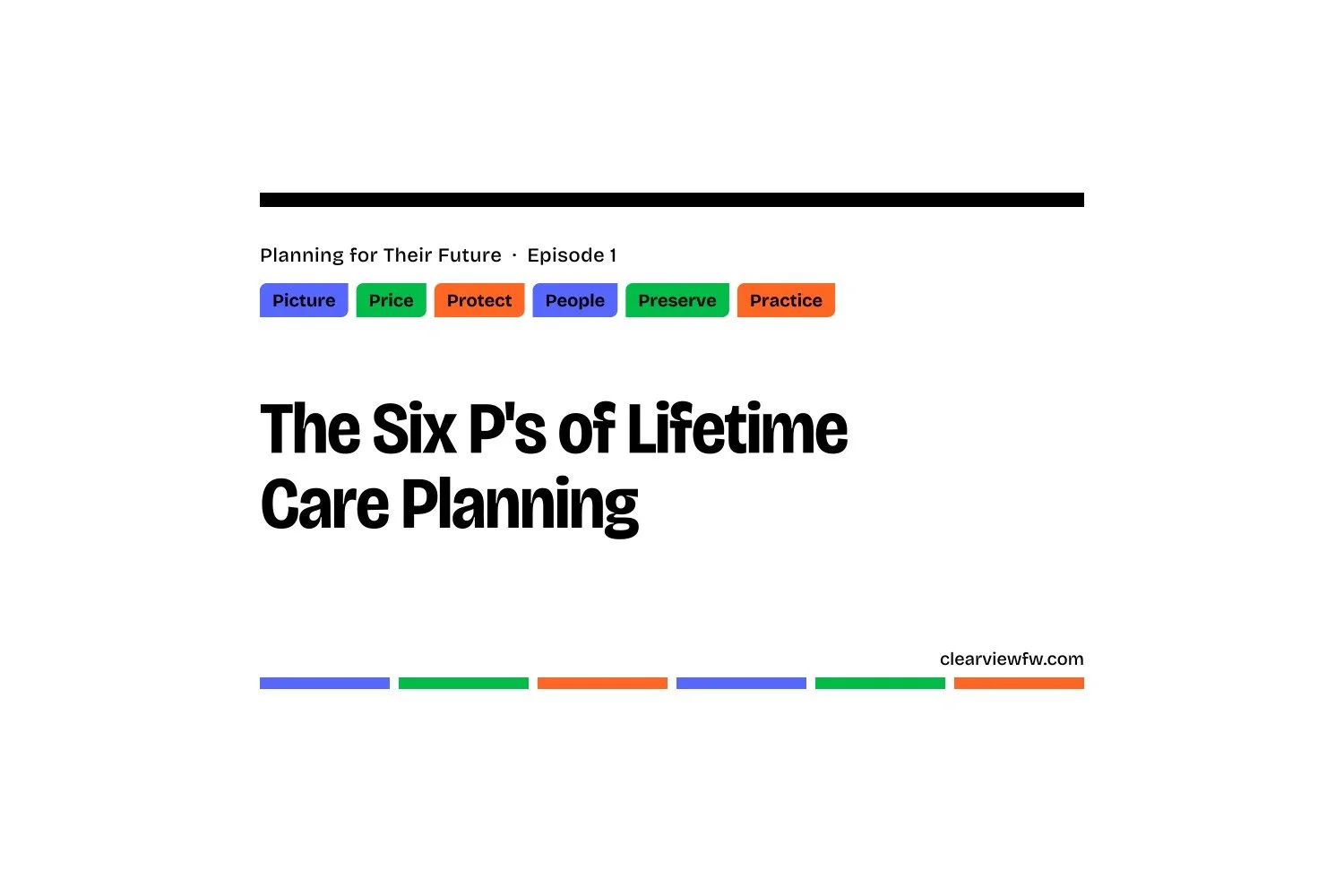
The Six P’s of Lifetime Care Planning
Most families have documents. Very few have a plan that keeps working when the parents can't run it anymore. Here's the framework for building one.